
Make a first real contribution to AI Safety
The SAIN Project Hub matches you with an experienced supervisor, arranges compute, and takes a project from open question to published finding. It is voluntary, remote-friendly, and open for applications at any time.
- 23 open projects
- 9 supervisors
- 12 publications
- rolling applications
Find a project, then join it
Every project SAIN supervisors have on offer, kept up to date by the projects team. One application form covers all of them: name up to three projects in it, and the projects team will introduce you to the supervisors within a working week. A VU or UvA thesis counts towards a degree there, so it is for that university’s students; every other project is open to anyone with the right background.
Topic
Who can apply
Thesis
Status
24 projects · Updated 2 November 2026 at 14:24
How memes, reels and headlines shape public narratives about AI
- Thesis (level open)
- Societal impact
- Evaluations
Filip Ilievski (opens in a new tab)
VU students only
How do different media (memes, reels, news headlines), independently and together, shape societal narratives about AI and its harms and benefits? Combines social-science frameworks with AI modelling. Looking for experience with vision language models or LLMs, knowledge graphs and machine learning (e.g. clustering), plus interest in social media and computational social science. Room for more than one student; aim is a publication at a venue like ICWSM or *ACL. VU Amsterdam.
Reward hacking in LLM agents trained with verifiable rewards
- Master's thesis
- Alignment and RL
Emile van Krieken (opens in a new tab)
VU students only
When and why do LLM agents trained with reinforcement learning from verifiable rewards (RLVR) find shortcuts that pass the reward without solving the task (reward hacking)? Empirical or theoretical. Requires the VU course Project Reinforcement Learning or comparable RL experience. Priority for VU students.
Program synthesis for mechanistic interpretability
- Interpretability
- Formal methods
Fausto Carcassi (opens in a new tab)
Applying program synthesis methods to mechanistic interpretability, for example automating the building of models of how LLMs implement computations. Programming experience required, cognitive science knowledge preferred. University of Amsterdam.
Theory of mind and plausible deniability, from the inside
- Interpretability
Fausto Carcassi (opens in a new tab)
Using mechanistic interpretability methods to study cognitive skills in LLMs, such as theory of mind and plausible deniability. Programming experience required, cognitive science knowledge preferred. University of Amsterdam.
Emergent personas in self-designing LLMs
- Alignment and RL
Fausto Carcassi (opens in a new tab)
Studying the personas that emerge when LLMs design themselves. Programming experience required, cognitive science knowledge preferred. University of Amsterdam.
Detecting AI poisoning at internet scale
- Security and privacy
- Societal impact
Fausto Carcassi (opens in a new tab)
Can we tell from high-level summaries of the text whether a small simulated internet has been poisoned by AI-generated content? Programming experience required, cognitive science knowledge preferred. University of Amsterdam.
You do not need a university post to do this work
SAIN’s offer is one line: bring your expertise to AI Safety, and the community, supervision, and support are here to take it further. The rest of this page is the mechanism behind that line: how a project is chosen, what support looks like week to week, and where the work ends up.
The hub is open to anyone with sufficient background:
- Students at Bachelor, Master, or PhD level
- Researchers, and people working in industry
- Policy professionals
- People with no formal affiliation
Remote participation works. Applications are rolling, so you can apply whenever you are ready, and for supervised projects you hear back within a working week.
One thing the hub is not: a job. SAIN does not pay stipends or salaries; participation is voluntary and educational. What SAIN does provide is supervision, compute, coordination, and, within reason, help with conference travel.
From open question to published finding
Every project in the hub moves through the same three steps. The handbook spells each one out in full; this is the shape of it.
Choose a project
There are three ways in, and all three are normal.
Join a supervisor's project. Every project a SAIN supervisor has offered is listed at the top of this page. Find one that fits your background and register your interest; the projects team introduces you to the supervisor.
Join an open collaboration. Some projects run without formal supervision. One person leads, usually whoever designed the project, and SAIN connects collaborators and supports the work.
Bring your own idea. Write a short proposal: the question, why it matters, how you would test it, and what you need. SAIN's Project Team reviews it, and can help you shape it if it is not fully formed yet.
Not every valuable contribution is a research paper: the work can be technical, governance, policy, or conceptual. When choosing projects, the team looks at three things: relevance to the Netherlands and Europe, relevance to transformative AI, and whether it can succeed on a small budget. If you are unsure whether a topic counts as AI Safety, the default answer is yes, provided you can articulate a plausible pathway from the work to reducing risk from transformative AI.
Work with support
Fill in the application form and, for supervised projects, you hear back within a working week. If there is a fit, a supervisor is formally assigned and the project gets its own channel in the community.
Supervision is a working relationship, not a lecture. You drive the day-to-day work; your supervisor helps scope the project realistically, reviews experiments and drafts, and steps in when a direction stops being productive. Meetings run weekly or biweekly, and you agree your commitment per project up front, whether that is five to ten hours a week alongside a degree or something closer to full time.
Supervisors come from universities, industry, and government. In academia they are usually at PhD level or more senior; outside it, they have several years of senior experience in a relevant role. Compute is arranged per project at the start, and computationally inexpensive projects are encouraged. Remote participation works throughout.
Publish your findings
A project is complete when its main question is adequately answered, including when the answer is negative, and the result is published in a presentable form: a paper, a policy brief, an evaluation or open-source tool, or a blog post on SAIN’s Substack or LessWrong. You get feedback on drafts, and SAIN may help with conference travel within reason.
That is not hypothetical. Work from this community has been accepted at workshops at NeurIPS and ICLR, which is where most first contributions in this field land.
NeurIPS 2025 workshop · Spotlight
The Anatomy of Alignment: Decomposing Preference Optimization by Steering Sparse Features
A transparent view of preference optimisation reveals how models can learn to favour style and formatting over honesty.
Read paper
ICLR 2025 · Building Trust Workshop
Self-Ablating Transformers: More Interpretability, Less Sparsity
Training small language models to select their active components produces more specialised, interpretable circuits without sacrificing language modelling performance.
Read paper
NeurIPS 2025 · Regulatable ML Workshop
EU-Agent-Bench: Measuring Illegal Behavior of LLM Agents Under EU Law
A benchmark tests whether AI agents take unlawful actions under EU law, even when the user’s request is benign.
Read paper- NeurIPS 2025 workshop · SpotlightThe Anatomy of Alignment
- ICLR 2025 workshopSelf-Ablating Transformers
- NeurIPS 2025 workshopEU-Agent-Bench
- ICLR 2025 workshopContextual Sparsity
- NeurIPS 2024 workshopSteering LLMs using Conceptors
- Apart Research hackathonAutoSteer
- Apart Research hackathonLocal Learning Coefficients
- Apart Research hackathonCollective Deliberation
- Apart ResearchSandbagging LLMs using Activation Steering
- Apart ResearchCybersecurity Persistence Benchmark
- SAIN projectPlaying with Perception
- Apart ResearchAI Misinformation and Democratic Rights
The people you would work with
Every supervisor keeps a public agenda of the projects they would like to supervise. Read it before you apply: the strongest expressions of interest respond to a question a supervisor has already posed.
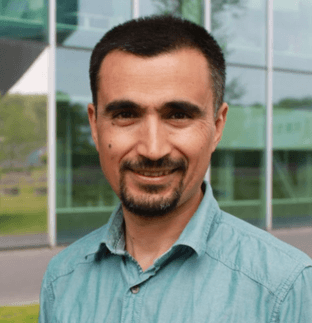
Fatih Turkmen
Associate Professor of Computer Science, University of Groningen
Research agenda (opens in a new tab)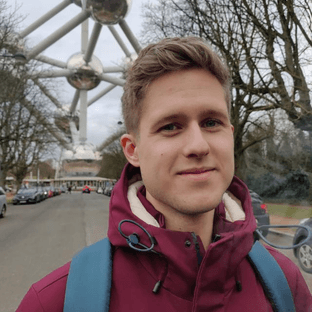
Leon Eshuijs
PhD student, Vrije Universiteit Amsterdam
Research agenda (opens in a new tab)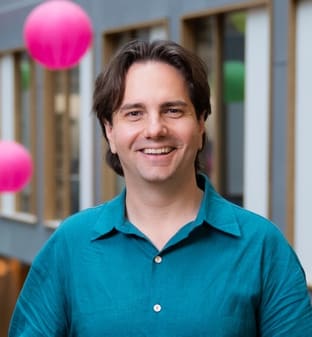
Filip Ilievski
Assistant Professor of Commonsense AI, Vrije Universiteit Amsterdam
Research agenda (opens in a new tab)
Satchit Chatterji
PhD candidate, University of Amsterdam
Research agenda (opens in a new tab)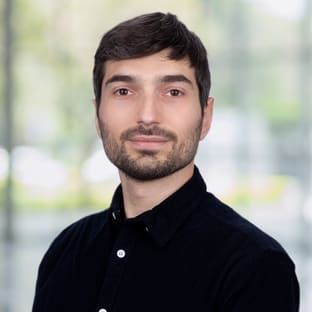
Sandro Pezzelle
Assistant Professor in Responsible AI, ILLC, University of Amsterdam
Research agenda (opens in a new tab)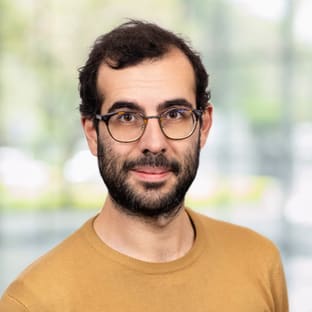
Fausto Carcassi
Assistant Professor, ILLC, University of Amsterdam
Limited: 1 place left across his projects
Research agenda (opens in a new tab)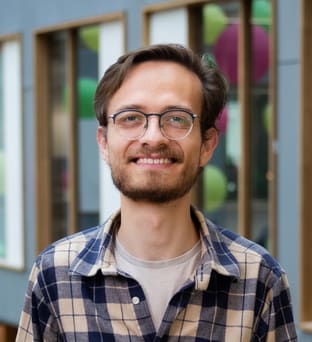
Emile van Krieken
Assistant Professor, Vrije Universiteit Amsterdam
Research agenda (opens in a new tab)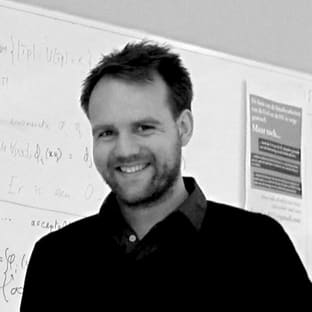
Peter Bloem
Assistant Professor, Vrije Universiteit Amsterdam
Research agenda (opens in a new tab)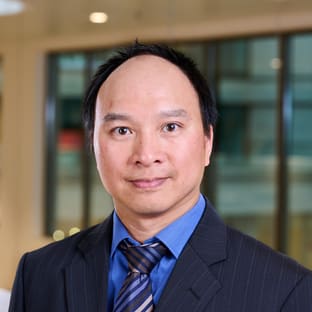
William Lippert
Senior Non-Resident Fellow, Global Governance Institute (GGI); based in The Hague

Steven Abreu
Research Scientist, MakerMaker
Availability to be confirmed
Research agenda (opens in a new tab)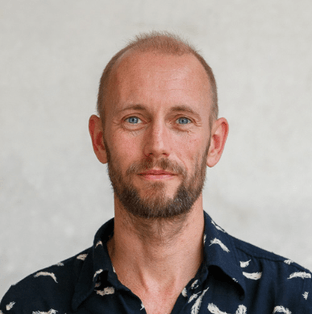
Jobst Heitzig
Working Group Leader, Senior Scientist, Potsdam Institute for Climate Impact Research
Availability to be confirmed
Research agenda (opens in a new tab)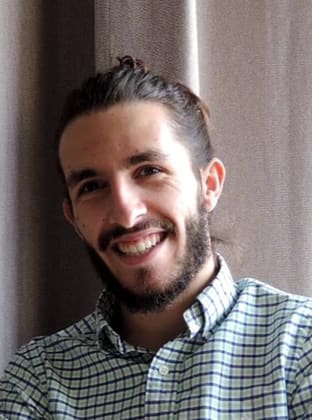
Guillaume Pourcel
PhD AI Candidate, University of Groningen
Availability to be confirmed
Research agenda (opens in a new tab)
Ana Lucic
Assistant Professor, University of Amsterdam
Full for now
Research agenda (opens in a new tab)
Supervise the next project
If you have substantial experience in a relevant field, usually PhD level or above in academia or several years in a senior role in industry or policy, and the work above looks like something you could guide, more supervisors means more projects. You do not need to be an AI Safety expert already. Supervision is remote-friendly, meetings run at a cadence you agree per project, and the Project Team handles the coordination around you. Fill in the supervisor form and we will follow up with next steps.
Become a supervisor (opens in a new tab)Apply whenever you are ready
Applications are rolling, and for supervised projects you hear back within a working week. Fill in the application form, or email the projects team if you are not sure where you fit and we will help route you.
The full process, expectations, and norms are written down. Read the Project Hub handbook